
Sounding pitch
The reference describes the pitches you hear, rather than only the notes written for a transposing instrument.
Musical Instrument Range Poster
Created by Alex & Sandy
A large-format poster that connects the sounding ranges of musical instruments and voices to an 88-key piano keyboard. Explore musical relationships, support learning, or display it as framed wall art.
For musical study, classrooms, bands, creative spaces and home decoration. You can also enjoy the illustrations or use them to start a conversation, without being a musician.
An instrument, a voice, a note or an illustration can catch your attention.
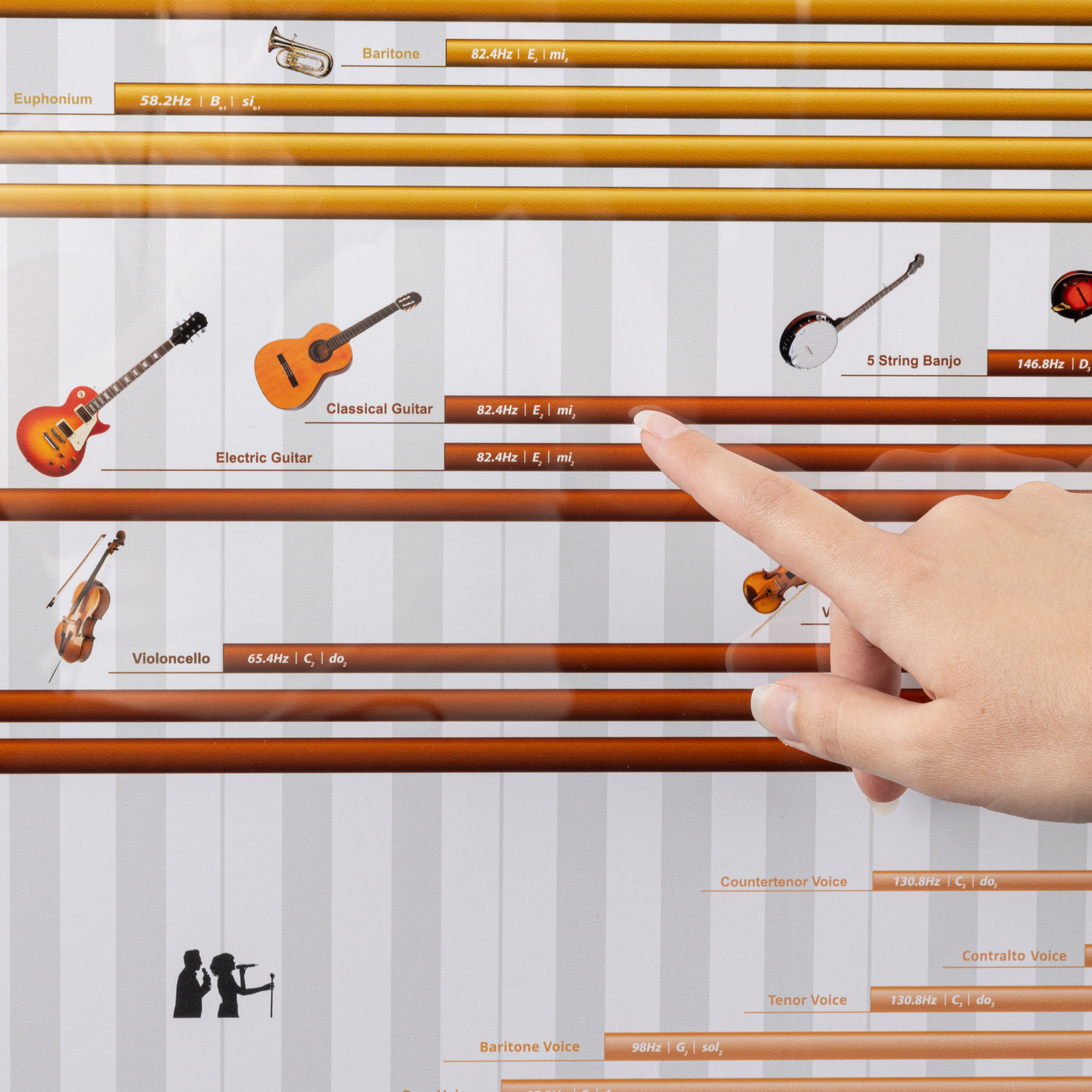
The range bars align with the piano keys so you can relate low and high sounding notes.
Compare overlaps and octaves, then explore note names, notation and frequencies.
Select a detail. Enlarge it to look closer.
Start with an instrument, a voice or a note. Discover how their ranges connect through a shared visual reference.
54″ W × 45″ HApproximately 137.2 × 114.3 cm
Basic frame included · descriptive document included
Purchase, delivery options and applicable charges are confirmed in the seller’s store.
FOLLOW YOUR CURIOSITY
The keyboard connects the information. Your interest decides where the exploration begins.
A horizontal bar relates the instrument’s low and high sounding notes to the keyboard below. Compare where the ranges of different instruments overlap.
Eight vocal categories appear alongside instrumental ranges. Explore shared notes and differences in register without jumping between separate pages.
Letter names, fixed-do syllables, octave references and frequencies in hertz bring several ways of describing pitch into the same visual system.
The reference describes the pitches you hear, rather than only the notes written for a transposing instrument.
Light vertical columns follow the black keys, helping you relate instruments to the piano and to one another.
Related instruments share a bar color. Family labels and instrument names give the colors their context.
The poster uses fixed-do solfège alongside letter names, with arrow markers helping you follow the labels. Movable-do practice uses syllables differently; a note’s spelling also depends on musical context, not simply the direction of a melody.
ONE POSTER. MANY WAYS TO MAKE IT YOURS.
A visual reference, a teaching aid, framed wall art or the beginning of a conversation. As Alex and Sandy, the project’s creators, describe, the poster can serve different purposes for different people; the piano keyboard connects the information without prescribing where to begin.
Start with a familiar instrument, a voice, an illustration or a note. Follow that interest at your own pace, with or without formal musical training.
A teacher can guide exploration: identify an element, trace its range or compare two instruments. Learners can also choose their own starting point.
Bring different instrument families into one shared view. Beginners can explore the instruments in their band and discover others they might like to learn.
Compare general sounding ranges when thinking about parts for different instruments. Use overlaps as a starting reference, alongside the guide and the needs of the actual performers.
Explore notes that voices and instruments share, and how a melody can sit in different octaves. Individual singers vary; the chart is not a voice classification or vocal assessment.
Relate letter names, fixed-do syllables, octave references and frequencies to the keyboard. Consult the connected view without moving between separate reference pages.
Display it as framed wall art in a living room, study or personal cinema room. The composition can appeal through its illustrations and visual character, even without an interest in musical technique.
A recognizable instrument can lead to a story, a question or an idea to play or sing together. Someone might discover an interest in guitar, mandolin, bass or another instrument simply by exploring the image.
67 LISTENING PROFILES. SIX FAMILIES.
Choose a family, select a sound and press play. Compare a short original phrase across instruments and vocal references, with the example register shown on screen.
Choose an instrument or voice
Example notes · sounding pitch
Ready to play
Digital sampled timbre. This example illustrates a sound, not the instrument’s full range.
Digital sampled timbres and labelled family approximations, not live performances. The phrase moves between octaves for the example register. Vocal examples use a shared choral simulation, not individual solo voice types. This website feature is separate from the printed poster.
11 COLOR-CODED GROUPS
Explore the families described in the publisher’s guide, in their top-to-bottom order on the poster.
Guide color: Medium dark gray
Pipe organs, harmonium, harpsichord, accordion and harmonica, compared against the piano keyboard reference.
Guide color: Titanium
Tubular bells, chimes, glockenspiel, xylophone, vibraphone, marimba and timpani.
Guide color: Light silver gray
Tin whistles in soprano, alto and tenor registers; each range may combine several instrument sizes and keys.
Guide color: Dark brown
Recorder flutes represented as a distinct family.
Guide color: Medium silver gray
The concert flute family, including transverse, alto and contrabass flutes, shown in sounding pitch.
Guide color: Black
B♭ clarinet, E♭ alto clarinet and bass clarinet, among the clarinet registers represented.
Guide color: Dark gray
The three reed instruments are grouped together for comparison.
Guide color: Bronze
Selected saxophone ranges, including the B♭ soprano saxophone, shown within one family.
Guide color: Brass
Trumpet, flugelhorn, mellophone, French horn, tenor and contrabass trombone, baritone, euphonium, sousaphone and tuba.
Guide color: Medium brown
Tenor ukulele, soprano mandolin, five-string banjo, classical and electric guitar, electric bass; violin, viola, cello, double bass; and harp.
Guide color: Pink
Soprano, mezzo-soprano, countertenor, alto, contralto, tenor, baritone and bass.
A SUPPLEMENTARY VISUAL RESOURCE
For a classroom, a rehearsal space or individual study, the same image can support different kinds of exploration.
Let an instrument, a visual detail or a familiar note be the starting point. Follow curiosity into related information at an individual pace.
Use focused questions to direct attention, compare registers and connect what students can see with what they hear.
MUSIC AS PART OF YOUR HOME
The poster can also be displayed as framed wall art. Its instrument illustrations, fine lines and musical relationships bring a distinctive visual composition to a living room, home office or listening space. You can choose it for its appearance and return to its musical content whenever curiosity calls.
Explore the frame options ↑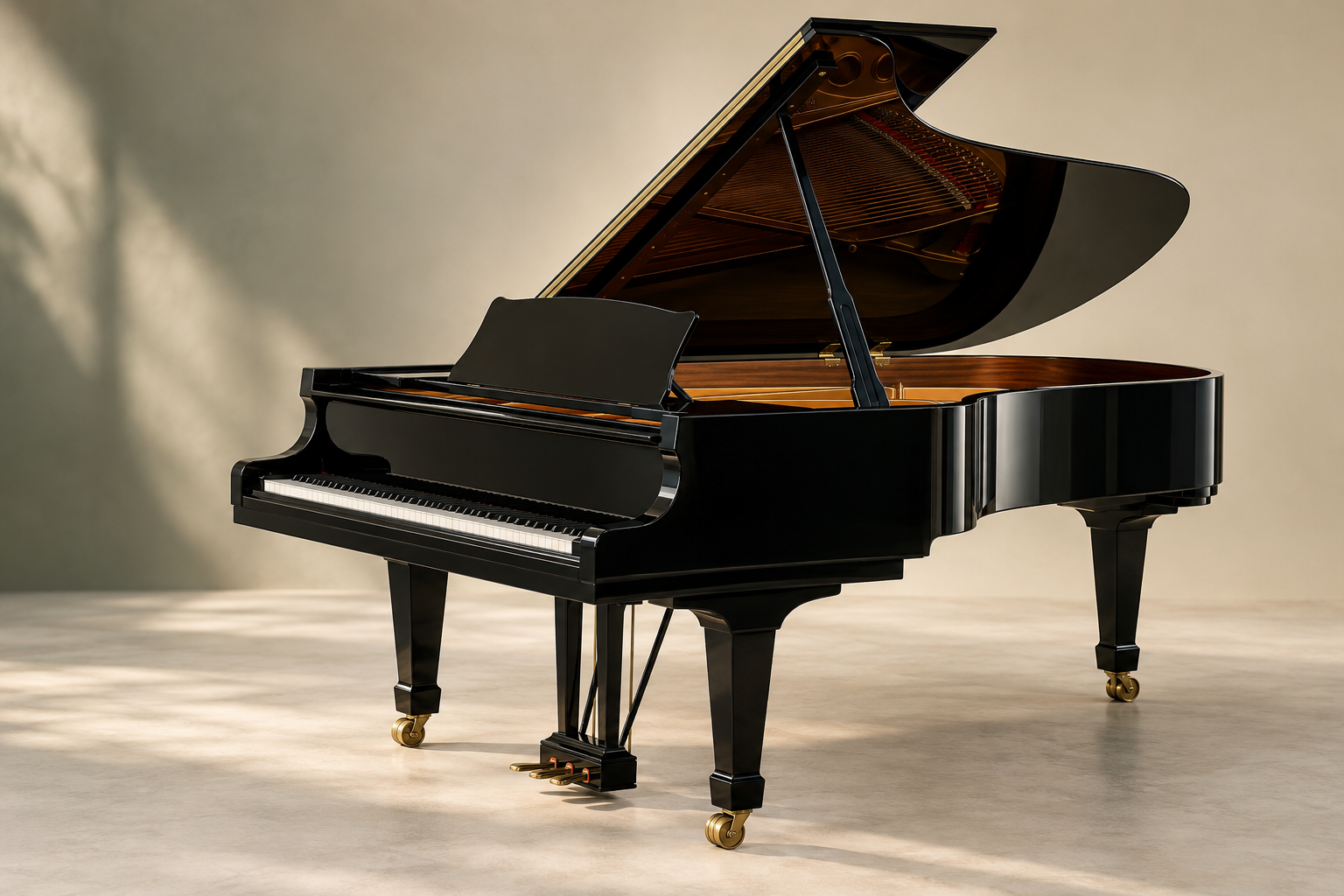
A decorative piece for a living room, home office or personal listening room.
An instrument or a familiar detail can open a conversation, even among people who do not study music.
The same composition remains a musical reference to explore over time.
CREATED BY ALEX & SANDY
Alex and Sandy are the creators of this project. It began with a search for one reference connecting the note names across a complete keyboard, bringing do, re, mi and letter notation together.
Frequency and key-number references were added to this shared visual system. The next question broadened the project: where do different instruments and voices sit within that same musical space?
The instrumental layer developed over years of work. The result brings illustrations, colored range bars and note information together so that a single image can open many paths of exploration.
The keyboard is the common reference.
Your curiosity is the starting point.
PRODUCT INFORMATION
The guide treats these ranges as general starting references, not fixed limits for every instrument or performer. The notes below summarize its qualifications.
Custom construction gives organs very different ranges; some extend beyond human hearing.
Different octave configurations exist. The guide presents a commonly found broad range.
The bars combine possibilities across different models, not the capacity of one single instrument. Consult the individual model.
Many versions exist; the guide uses commonly written ranges.
The reference reflects a traditional band instrument, rather than every available version.
These instruments have relatively consistent range patterns, with variations between models.
The displayed span covers the high end of small drums and the low end of large drums; other combinations exist.
Each bar summarizes multiple whistles in different keys and registers; it does not describe a single whistle.
Traditional construction makes the illustrated ranges comparatively consistent.
Accessories can extend a range. For example, a B-foot joint can extend a concert flute below its usual low C.
Three clarinets were selected as references; the family includes other variants.
The guide uses traditional sizes for a general comparison, rather than every variant.
The chart presents a limited selection from a broader family.
The ranges are conservative references. Models, accessories and a player’s skill can change the practical limits.
Instrument sizes, versions and techniques vary. Treat the displayed ranges as starting references for further study.
Vocal categories are traditional descriptions. Sources differ, and each singer has an individual capacity.
Yes. The poster can be displayed as framed wall art at home or in a creative space. The US$81 base price includes the basic frame. Two further frame options are being prepared; their finishes, photos and any additional prices are still to be confirmed.
No. The piano keyboard is a shared reference. You can begin with a string instrument, a wind instrument, a voice or the visual composition itself.
Formal training is not required to begin looking and comparing. The level of detail you can interpret will grow with your experience, and a teacher or the accompanying guide can help.
No. The chart brings together a broad selection, and the guide notes variations in models, techniques and individual vocal ability. It is an initial visual reference, not an exhaustive specification.
This website is available in English, Spanish and Portuguese. The product and original documents shown are in English; website translation does not change the printed artwork.
Check the seller’s current price, sales tax, freight, destination availability, framing and delivery terms in the original store. A descriptive document is listed as included.
The current product listing states that sales are final and orders are non-refundable. Read the seller’s full policy before purchasing.
No. The player is an interactive feature of this website. The printed product and its descriptive document are separate from the digital listening demonstration.
LET’S TALK
Questions about the poster, frame options, delivery or educational use? Contact the project’s creators directly.
SILVER ARGENTUM / MUSIC NOTATION POSTERS
A reference to revisit. An image to explore.
Basic frame included · descriptive document included